Index

DocsOur visual story

Built around
connection.

Wires in the sky. Paper edges. Familiar objects in a new arrangement. A few notes on the way Index looks, and the thinking behind it.

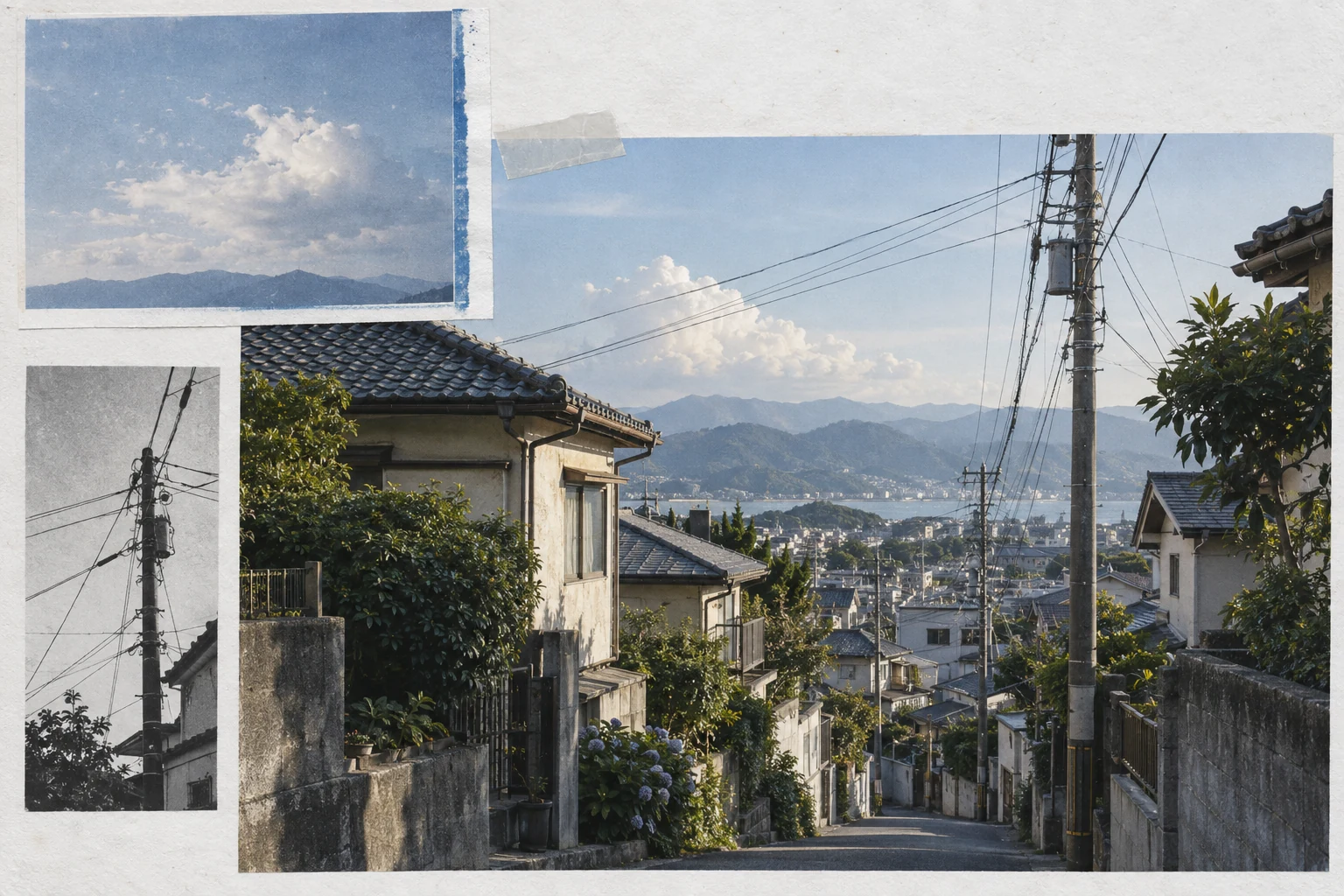
Layered neighborhood rooftops and overhead wires in a pale blue photographic collage
01 / A connection has a place in the world.Index image studies

Something to hold
the connection.

A pylon supports a small part of a much longer line. It stands in an ordinary place: beside a road, across a hillside, at the edge of a town. Useful infrastructure, made and maintained by people.

That is why it belongs in Index. An idea can move between people, tools, and conversations. A Board gives it somewhere to be held, with context for the next person to pick up.

We want the people behind those connections to stay in view. Someone asked the question, made the observation, or took the time to share what they knew.

See how shared context works
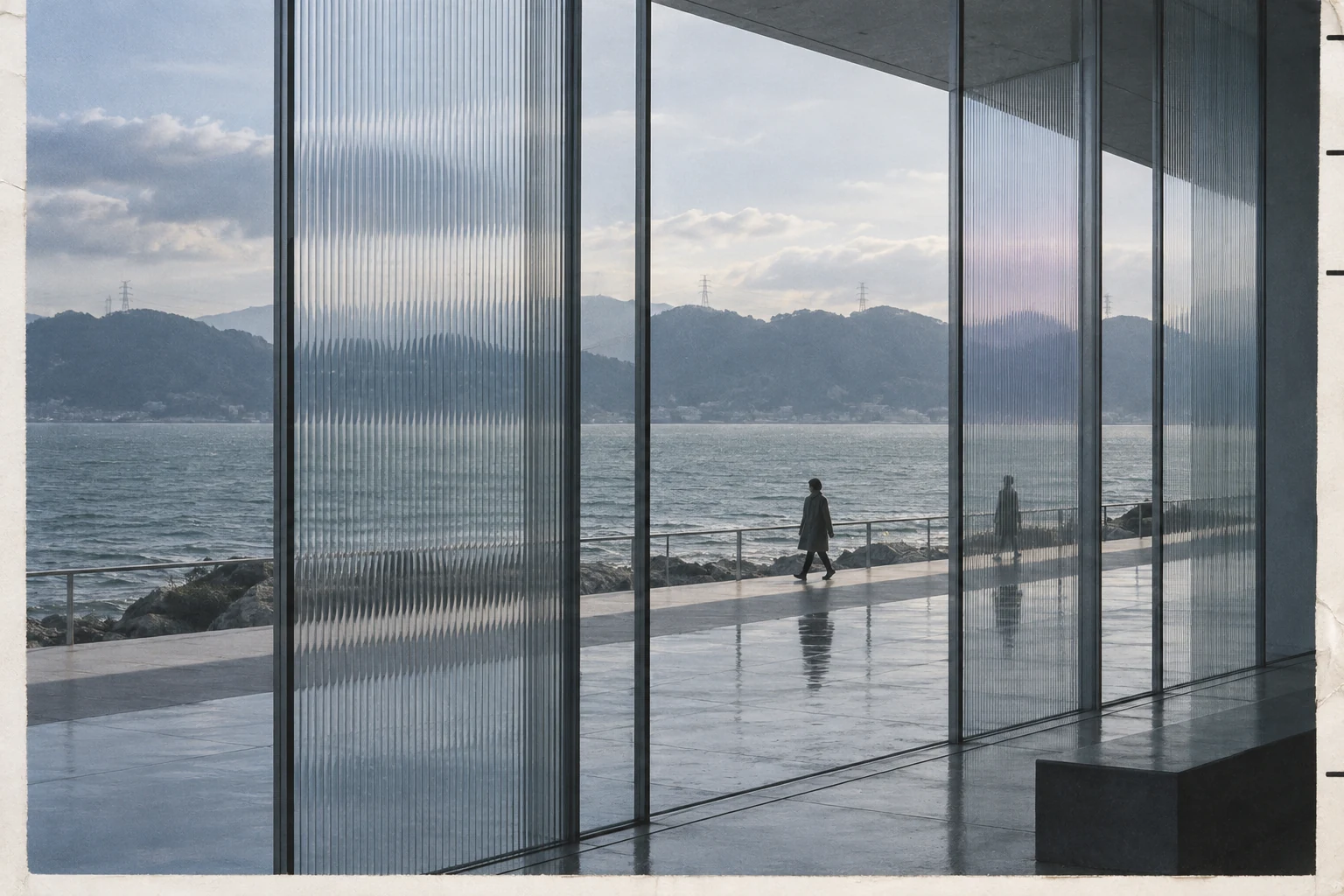
A person walking beside the coast, seen through ribbed glass with pylons on the distant hillside
People give the connection its purpose.
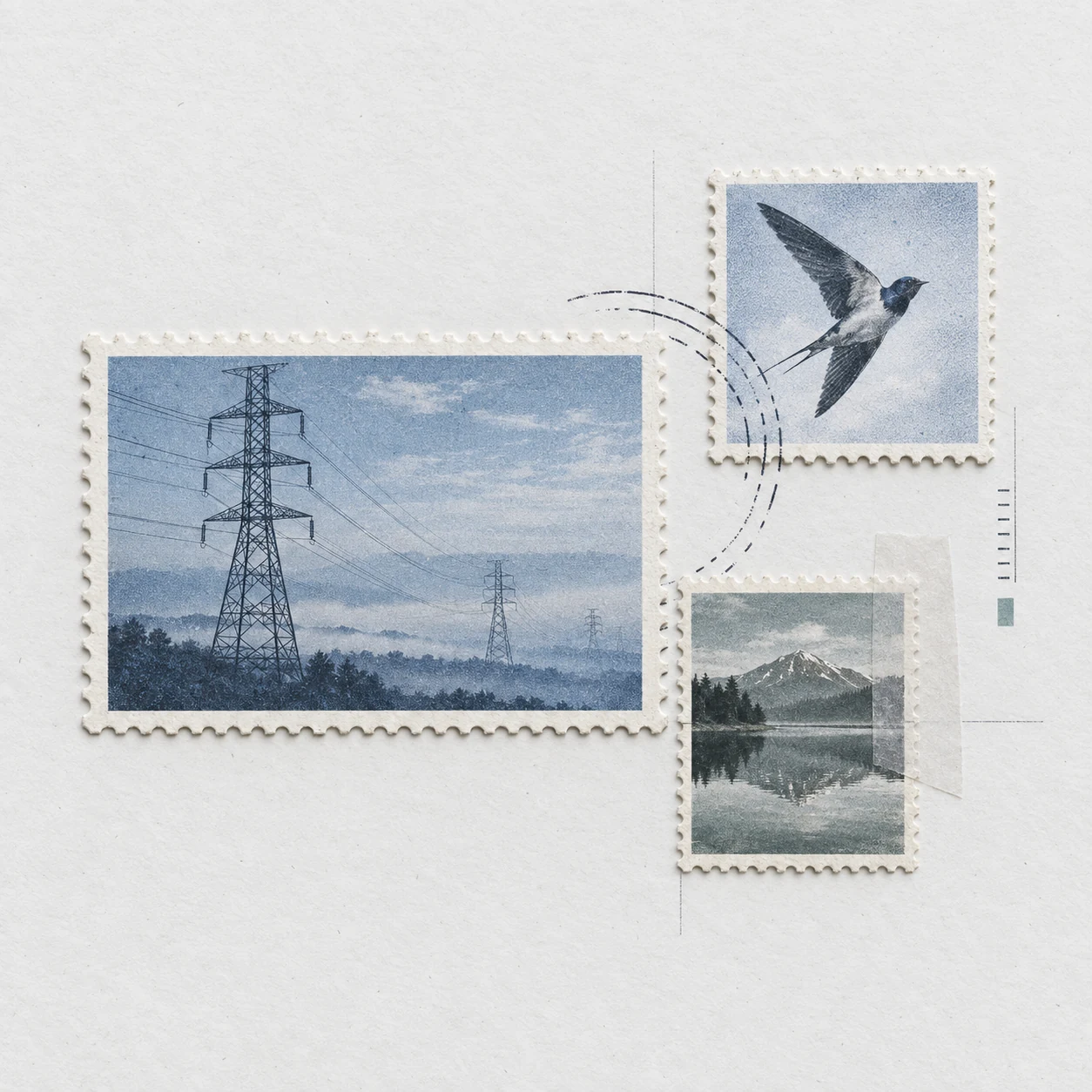
Original art stamps showing a pylon, a bird, and a mountain lake on pale printed paper
02 / The pieces can still show their edges.

An idea rarely
arrives whole.

A line from a conversation. A reference beside a brief. A note left for someone else. Our collages bring fragments together and leave their edges visible.

Paper and tape make the act of assembling something feel tangible. The pieces form a new picture while still showing where one ends and another begins.

That matters to the way we think about memory. A useful connection should leave a path back to its sources and the people who contributed them. In Index, you can return to a saved entry, follow its context, or reuse an instruction through a Context Card.

A little context, ready to reuse

Blue, with room
around it.

These colors give the work a common ground. Blue carries through the images; paper leaves room to read. Slate, graphite, and a small amount of blue-green give the layers definition.

  • Index blue

    #6C86B5

    The thread through the imagery and selected details.

  • Deep blue

    #4D6689

    A stronger edge for actions and contrast.

  • Slate

    #333B49

    Structure, dark detail, and readable ink.

  • Paper

    #F4F4F4

    The ground for words and cut edges.

  • Ice

    #E9EFF8

    A pale layer for quiet separation.

  • Mist

    #C5D0E3

    Borders, dividers, and softer blue fields.

  • Muted

    #707A8B

    A supporting tone within the layers.

  • Graphite

    #474B52

    Secondary ink and printed detail.

  • Night

    #141414

    A dark canvas and strong type.

  • Charcoal

    #242428

    Depth inside the dark surfaces.

  • Blue-green

    #6B9DB0

    A smaller note of water and glass.

These are our design choices, rather than fixed meanings a color carries. The proportions can shift; the family stays recognizable.

Familiar things.
A different arrangement.

Everyday infrastructure gives the images a place. Elasmosaurus brings a longer view of time. Printed fragments let both meet on the same sheet of paper.

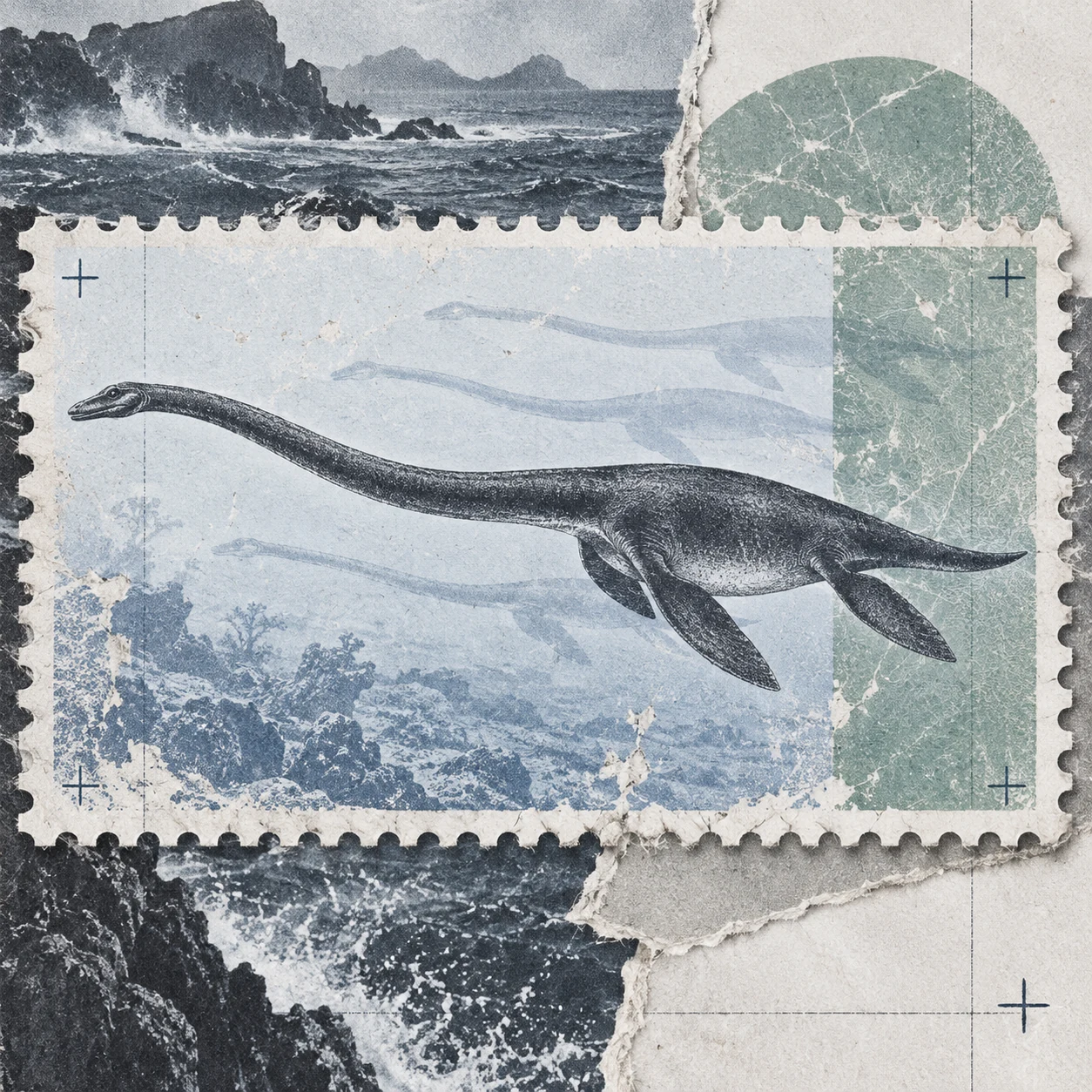
An Elasmosaurus illustration on worn perforated paper, layered with blue waves and a sea-green print
Deep time / Elasmosaurus imprint

Something worth looking closer at.

Elasmosaurus brings curiosity and deep time into the visual language. Its unfamiliar shape asks us to slow down and look again. Like a fragment kept in an archive, it suggests that an incomplete view can still be worth carrying forward.

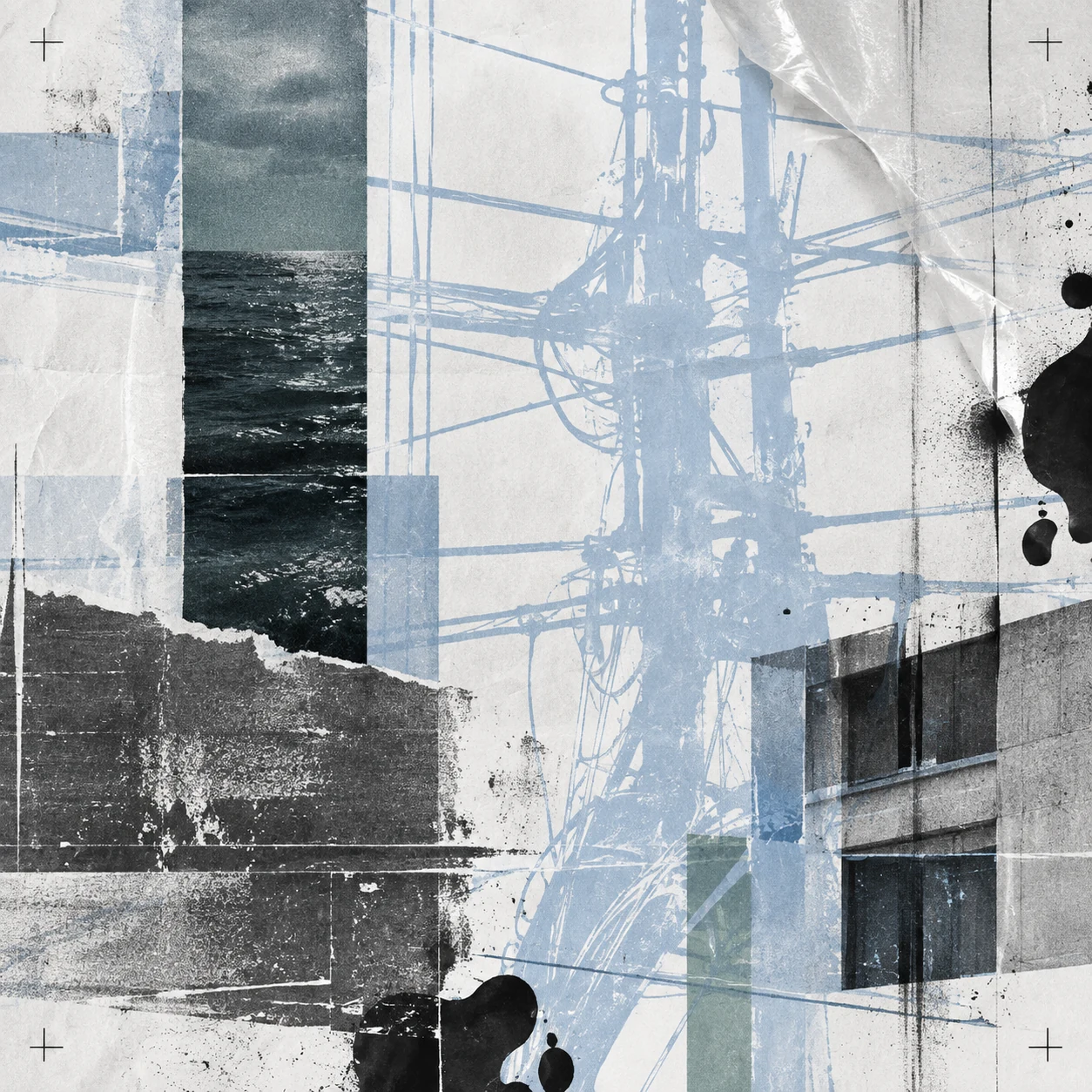
Blue cable traces and concrete architecture layered with eroded print, translucent film and abstract ink shapes
Print experiment / Signal erosion

The edges tell part of the story.

Faded ink, exposed seams and shifting layers show how an image has been assembled. Each fragment keeps something of its own character. The new picture comes from the relationship between those pieces.

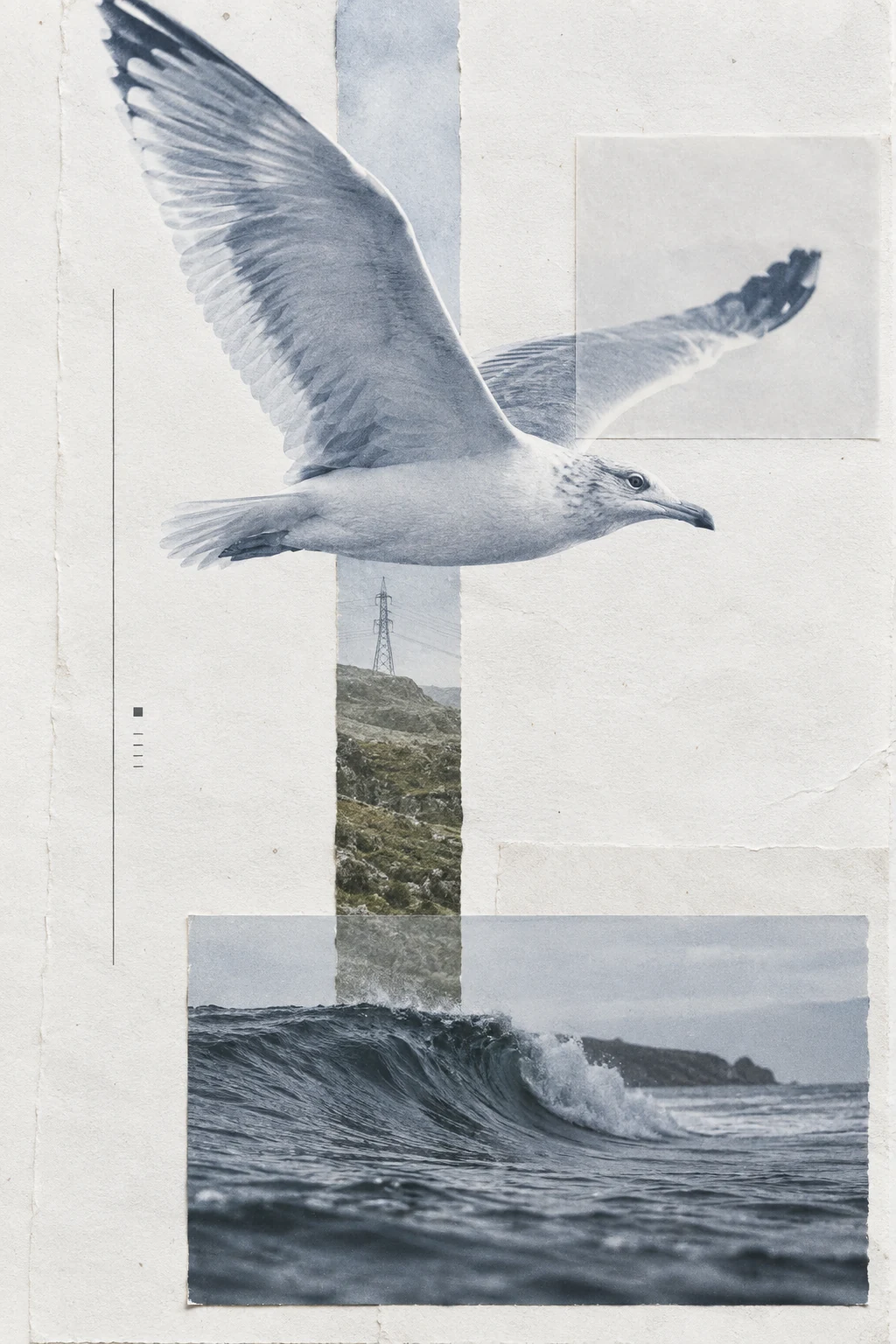
A bird and coastal landscape layered into an archival paper collage
Field study / Flight notes

Room for the world outside.

Birds, water, and landscapes leave space around the infrastructure. They keep the images connected to a world people live in, with movement and detail that no grid quite contains.

On the surface

Grain, scanlines, and printed pixels give the images the feel of a record that has been handled and seen. The art can be layered and unexpected; the interface still needs to be clear.

The person stays
part of the picture.

AI can help retrieve, combine, and work with context. People bring the purpose, the judgment, and the reason to keep something in the first place.

Our design should make that relationship easier to understand. What is connected? What can it read or write? What was saved, and can you change it? Those questions belong in the experience.

Index gives you Boards to organize and review, entries you can edit, and connector permissions you can choose. Consent and control need to be practical things you can use, with clear limits you can understand.

Read about connection permissions